

Minimum order quantities for printed packaging and the 1000 unit paradox

The MOQ (Minimum Order Quantity) for high-quality packaging printing typically ranges between 500 and 1000 units. This threshold depends on technical factors such as machine setup costs and the creation of physical plates or dies. Ordering 1000 units helps reduce the unit cost while ensuring top-tier industrial quality. Contact us for a technical consultation on your production volumes.

What is the MOQ for packaging printing?

Hi! If you’ve ever tried to order custom packaging for a launch or a capsule collection, you’ve probably run into an invisible wall: the MOQ (Minimum Order Quantity). 

The most common question we receive is: “I only need 200 boxes/hangtags, why should I order 1000?”. It’s a fair question. The short answer (“it’s our policy”) is frustrating and explains nothing. The real answer, instead, is purely mathematical and relates to the physical quality of your brand. Today we take you into the production department to show you what happens before the first label is printed and why choosing the print quantity is the first step of a successful strategy.

Insider’s curiosity: in the pharmaceutical world there is a saying: “The first pill costs 1 billion dollars. The second costs 10 cents.” The same principle applies to custom packaging projects in both small and large print runs: all printing costs are in research, setup, and plates (the “first pill”). Once the machine is running, the unit cost drops sharply. You are paying for engineering and professional printing services, not just paper.
- CO&IN

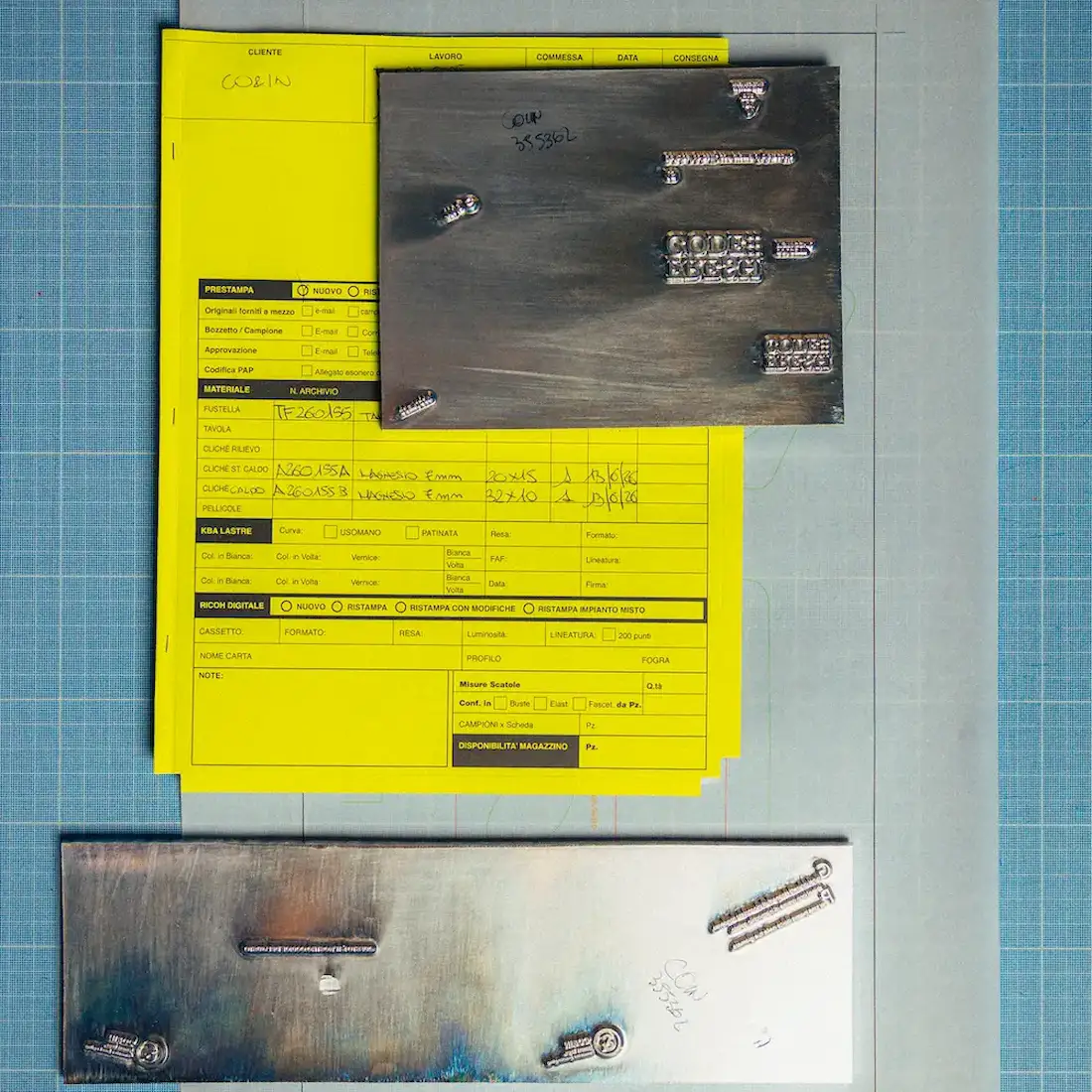
printing plate

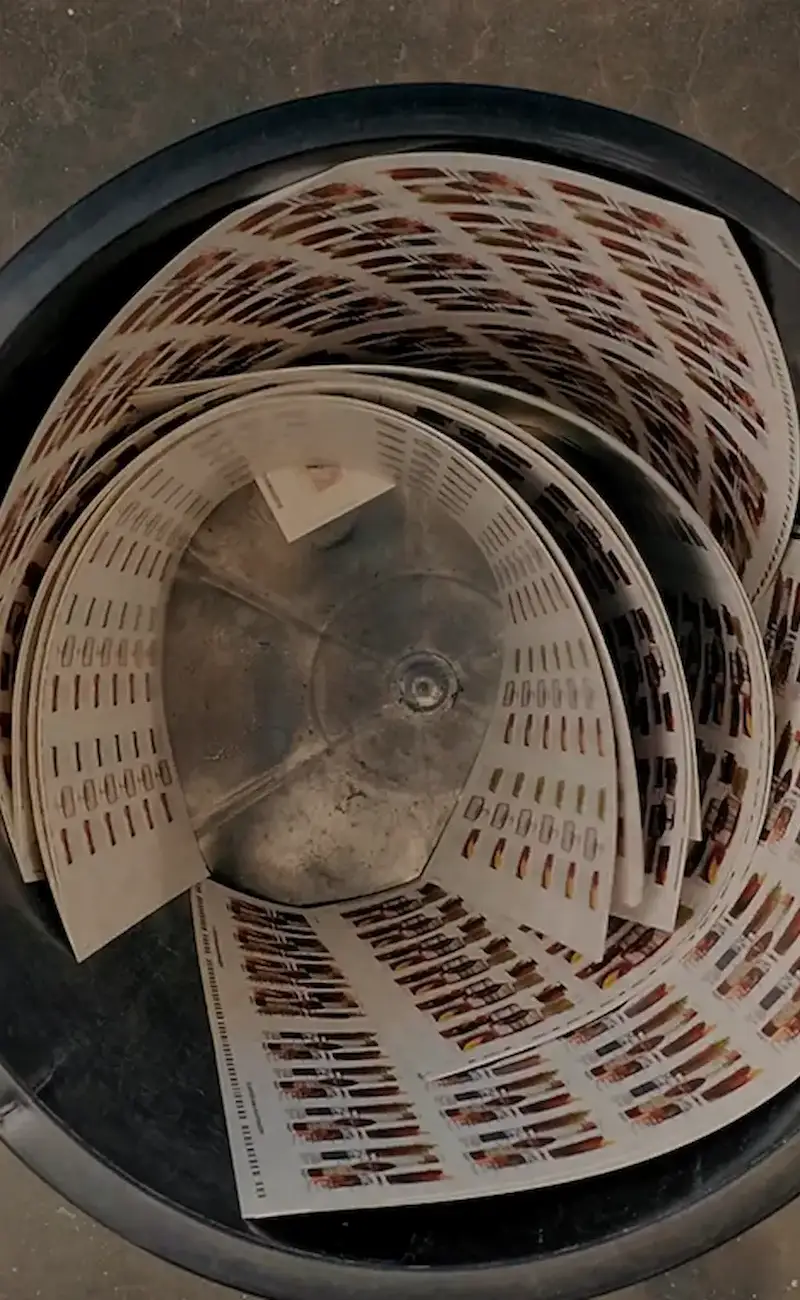
fogli scarto

These are the sheets we discard while calibrating the machine to achieve perfect black and millimetric registration

Why does printing fewer pieces cost more?

The reason why a print order of 200 pieces can cost almost as much as one of 1000 lies in the very nature of industrial printing. We are not talking about a “click and print” process, but about a complex mechanical choreography that requires time, precision, and materials.

Fixed setup costs and printing plates

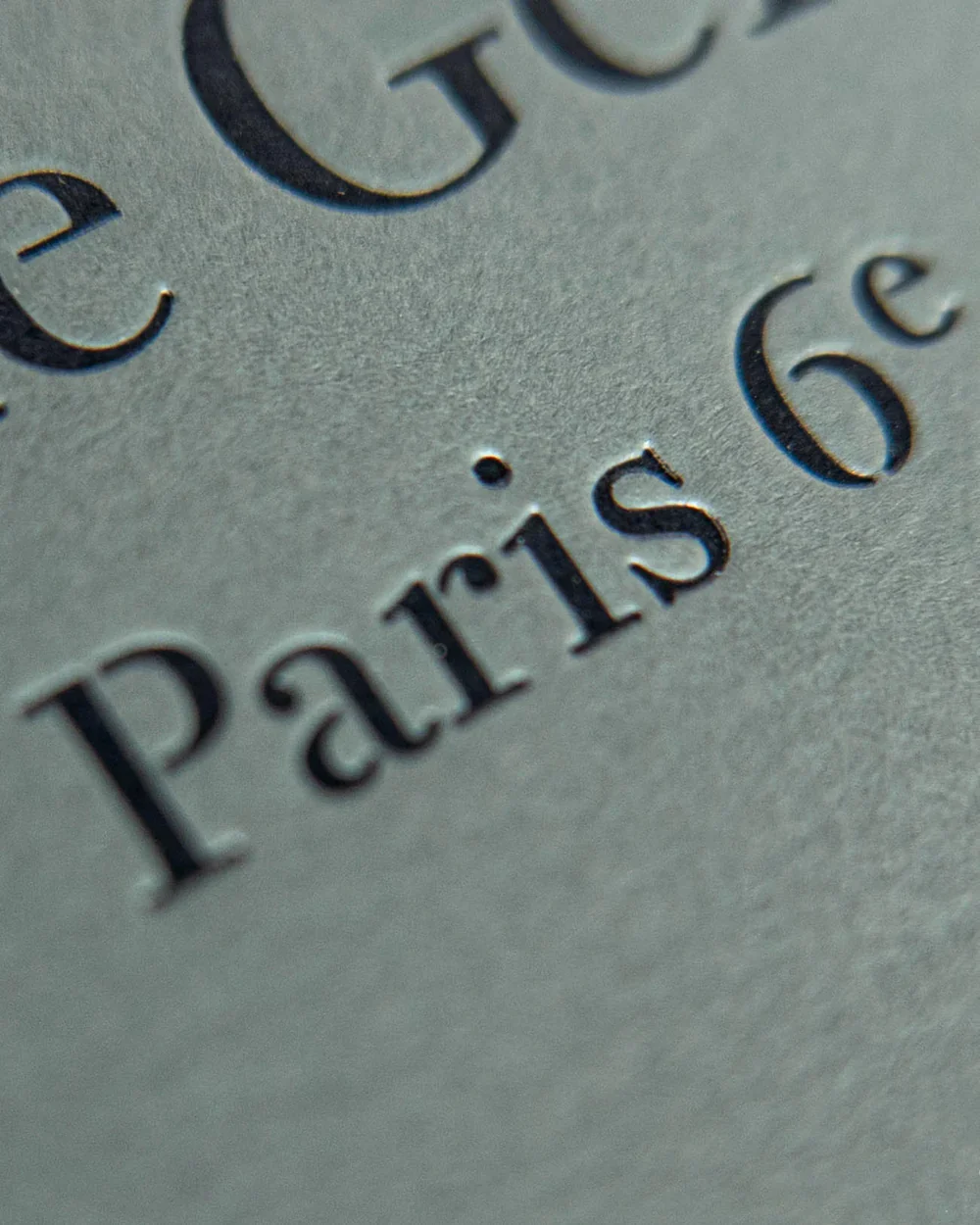
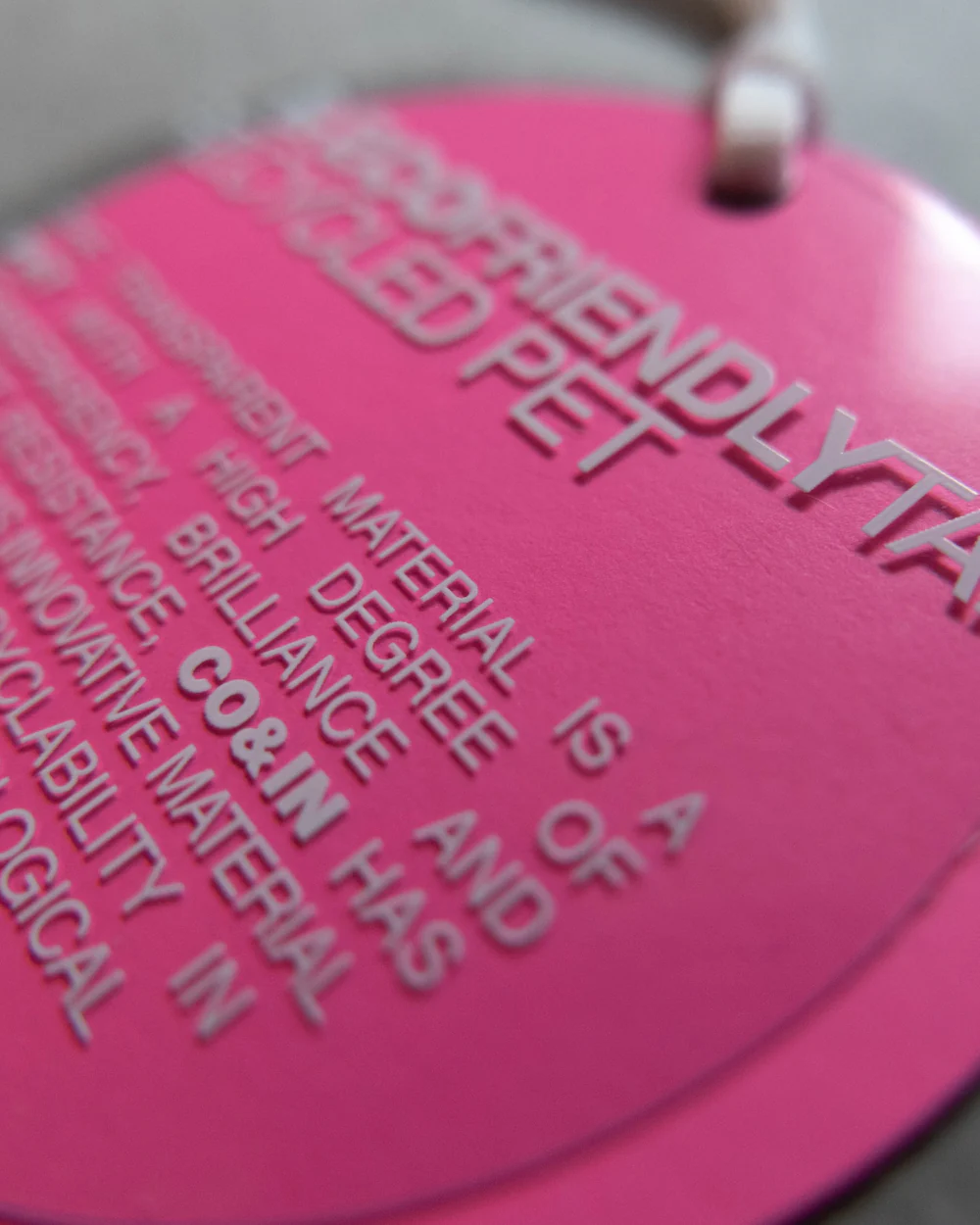
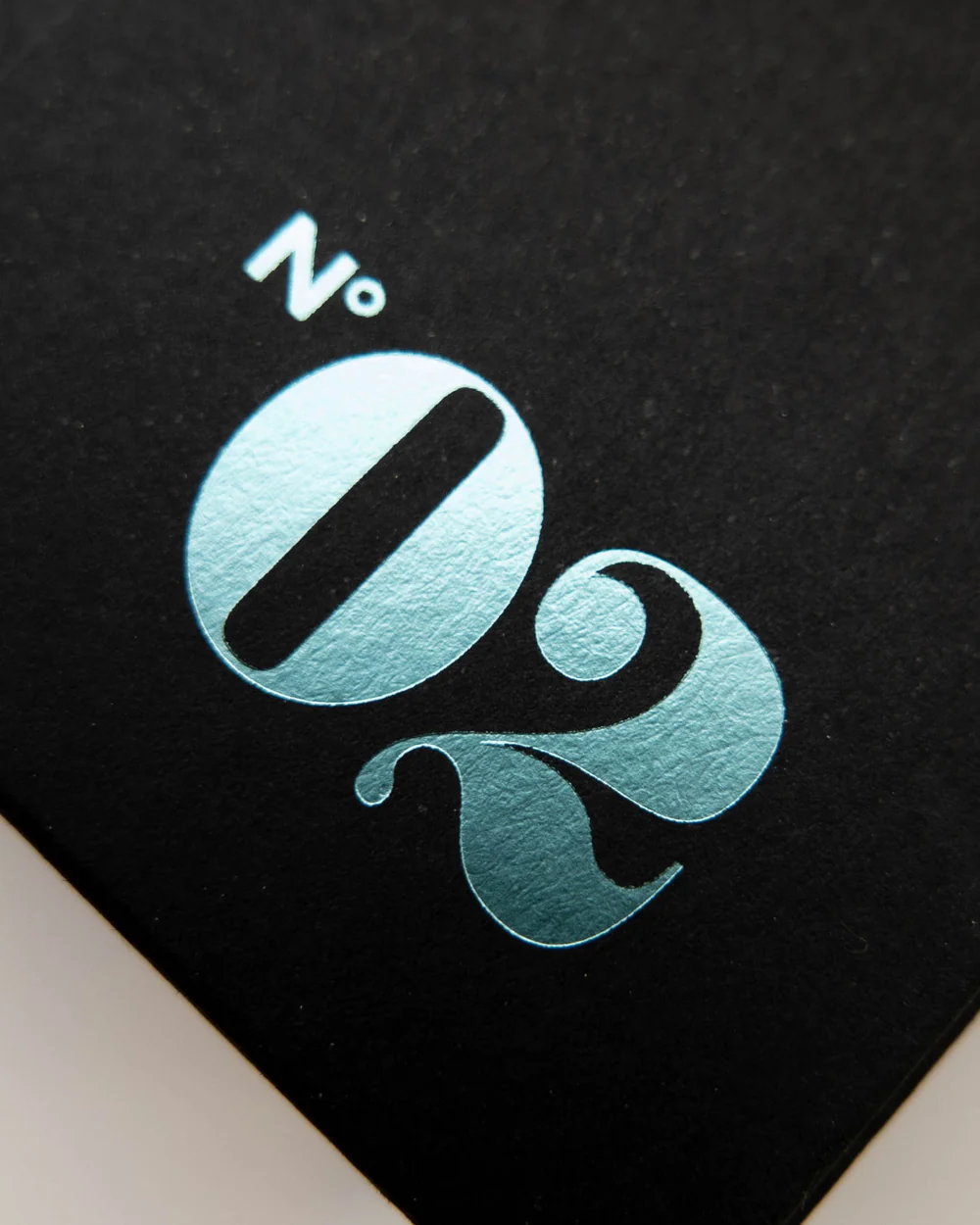
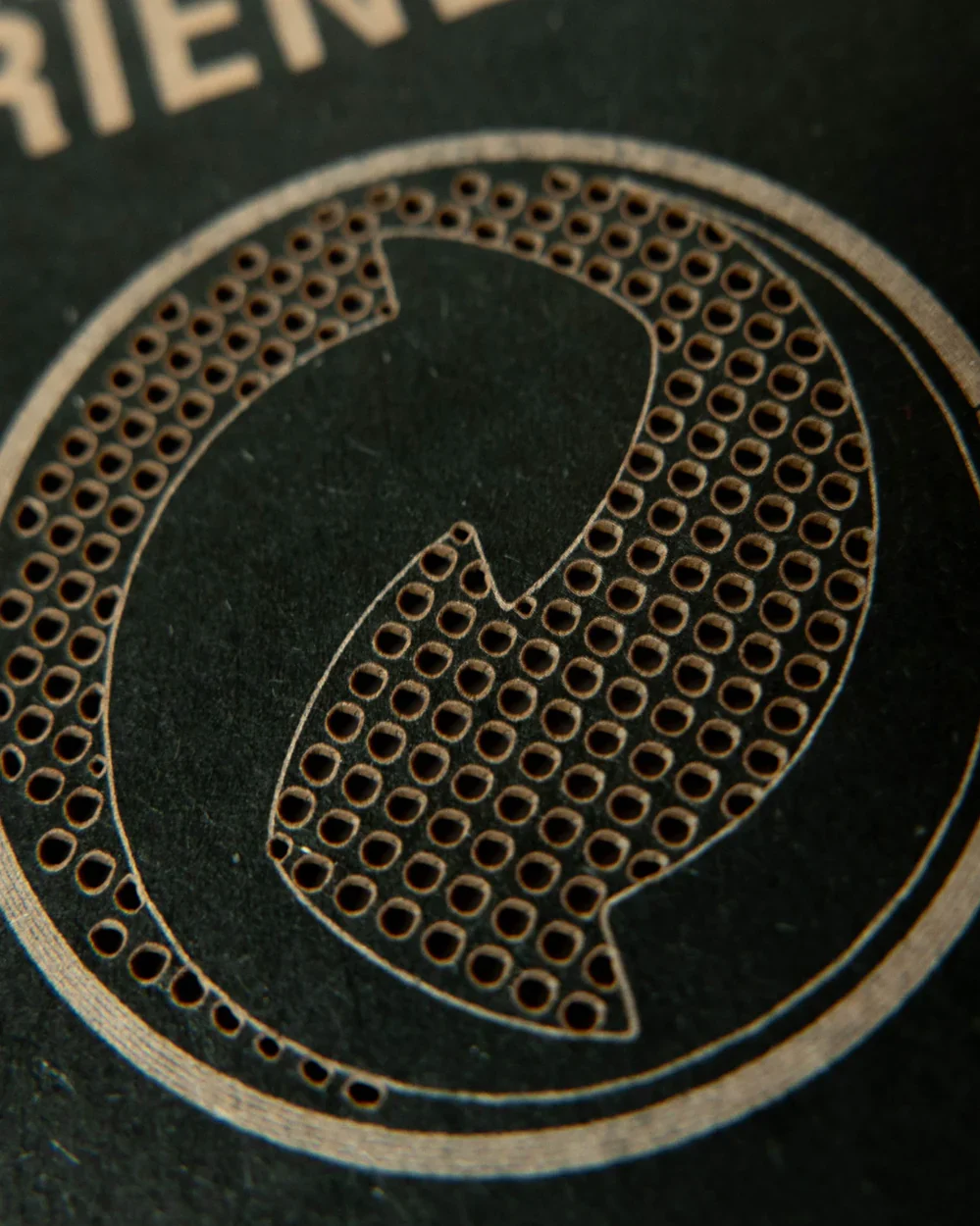
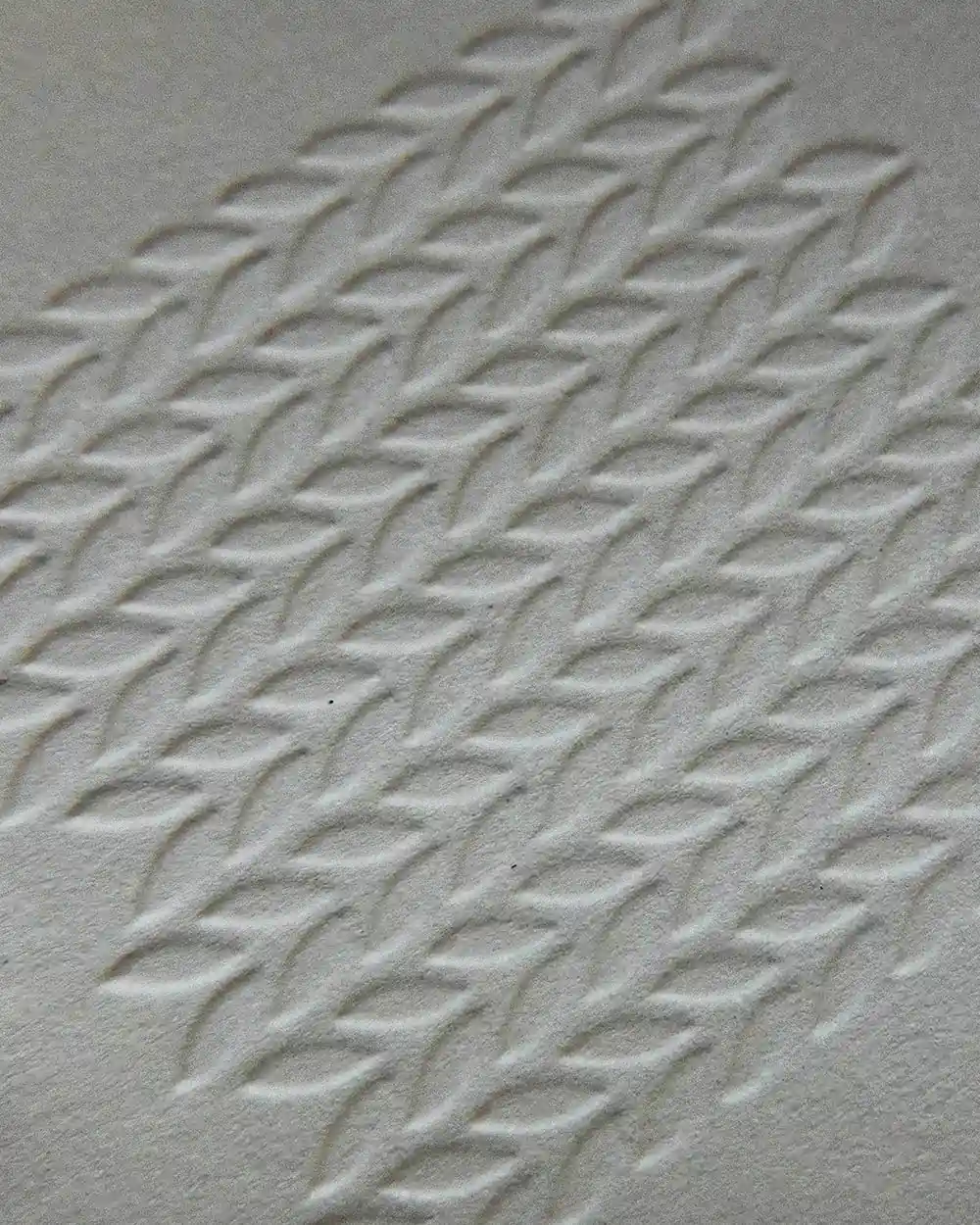
We are used to home printers: you click “print” and the sheet comes out. In industrial packaging, the high-quality kind with gold foils, tactile embossing, and colors that do not fade, the process is physical, not digital. For every custom printing project, we need to create physical plates or face significant machine setup costs.

On 100 pieces, the plate cost has a strong impact on the unit price. On a 1000 piece print run, its impact becomes almost invisible. Let’s do the math: if you order 100 pieces, the fixed plate cost is divided by 100. The result is that you pay X euros per label just to “turn on” the machine. If those same costs are divided by 1000, the savings are mathematical. This is why MOQ works in your favor: it allows you to access finishing techniques that would be prohibitive on small runs.

Machine setup and unavoidable waste


There is another factor that is often overlooked when evaluating box printing: machine stability. Industrial printing machines (letterpress, foil stamping, offset printing) are like racing cars: they need to reach operating temperature and be adjusted with extreme precision.

The physiological startup waste of a professional machine is about 80 – 150 sheets per color. On a 200 piece run, this means that almost half of the paper is used just to calibrate registration. On large quantities, the waste incidence drops drastically to below 10%. If we only printed 200 pieces, the machine would stop right when it has reached optimal quality. With 1,000 pieces, we ensure that top-tier quality is consistent from the first to the last unit. Small industrial batches are difficult to manage precisely because setup time exceeds actual printing time.

MOQ and quality: digital printing vs industrial printing

“Ok, but what if I did it digitally?” It’s an option, of course. But the result changes radically. Digital printing is great for small formats or quick tests, but it is inherently “flat”. 

Industrial printing allows that sense of “full” colors and high definition that digital often cannot replicate. We compared two similar hangtags produced with the two different methods, and the difference in depth is clear.

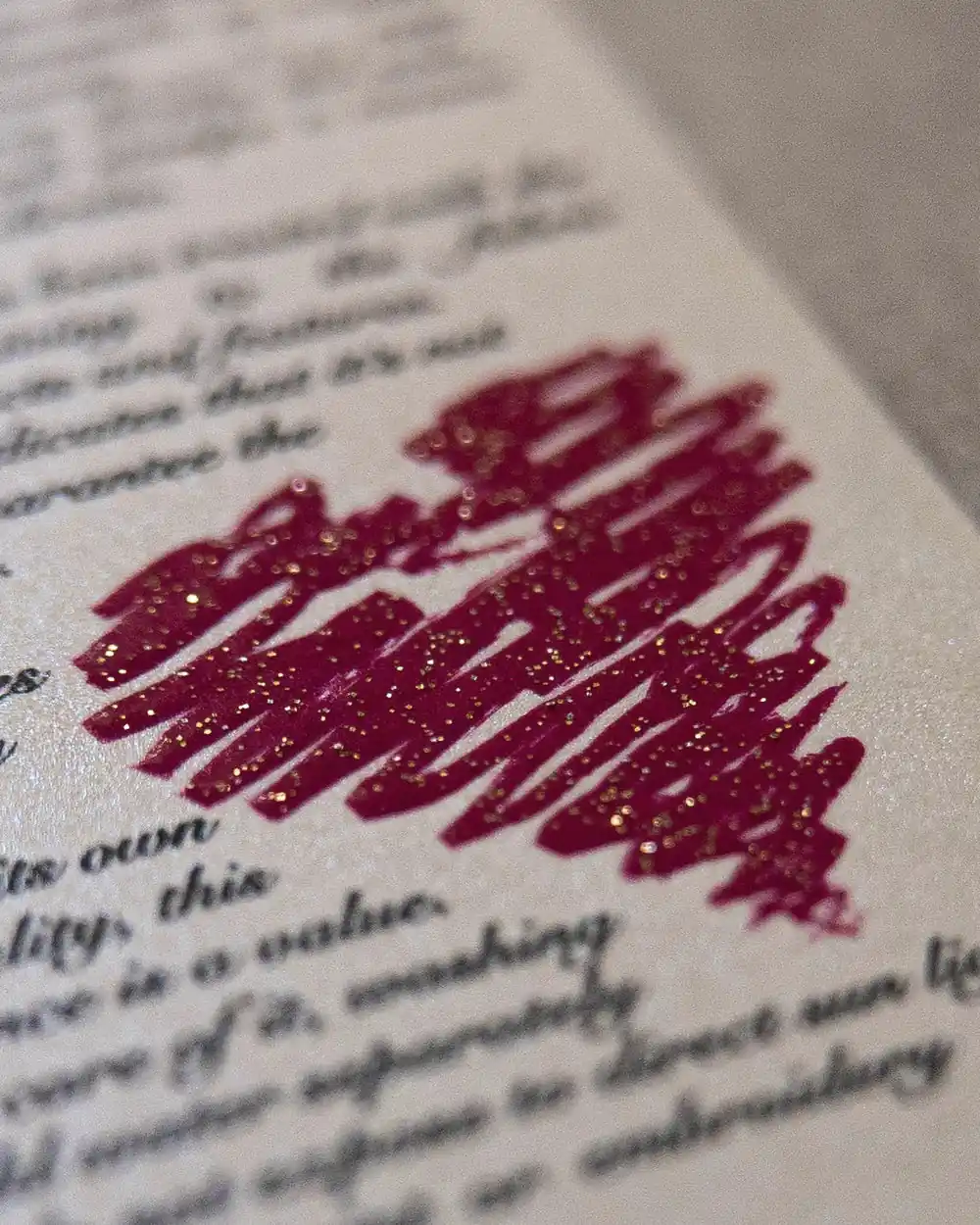
The light reflects differently because there is a physical difference in the thickness of the ink or foil. This level of detail and the various print embellishments (such as blind embossing or raised UV) require industrial volumes to be economically sustainable. It is also possible to print digitally, but if your goal is premium positioning, traditional printing has no rivals.

Macro estrema di una stampa digitale - CO&IN

Extreme macro shot of a digital print

Stock scatole impilate - CO&IN

Peace of mind. Your stock is ready in the warehouse.

How to reduce costs: packaging stock

Many clients are afraid of stock, fearing they will have “too much” idle inventory. But brands that scale see surplus as a strategic asset, not as an unnecessary cost.

Ordering a print run of 1000 or more pieces instead of fragmented small batches allows you to:

  • Reduce unit cost: Your margin on the final product increases immediately.
  • Operational efficiency: You won’t have to pay for a new setup in a month when you run out of the first 200 boxes.
  • Scalability: You have the certainty of being ready if sales explode or if an influencer suddenly talks about your brand.

In a fast-moving market, continuity in custom printing is essential. Often, lead times for a new production run can slow down your business; having a “buffer” of inventory is the winning move for anyone aiming for top-quality standards without logistical compromises.

Packaging is not just a cost, it is the first salesperson of your product. Investing in volume means investing in your brand perception and unlocking superior printing technologies.

Do you want to understand which finishing (gold, embossing, UV) performs best for your numbers?

Contact us for a technical consultation, we will evaluate together your ideal printing format and you will be able to experience the difference firsthand.

See you in production.

We inspire your desire to communicate

A detail is already a message. That’s why we’ve collected examples, finishes, and materials in a sample book designed to stimulate new ideas and make your products speak more powerfully. Every inspiration is a promise of identity: papers that rustle to the touch, surprising textures, solutions that combine aesthetics and function. An invitation to imagine, design, and find “that” material that seems tailor-made for your brand.

Download our Tag inspiration book 2026
Campionario - CO&IN
Preparazione inchiostri personalizzati stampa pantone - CO&IN
Campionario colori etichette personalizzate - CO&IN
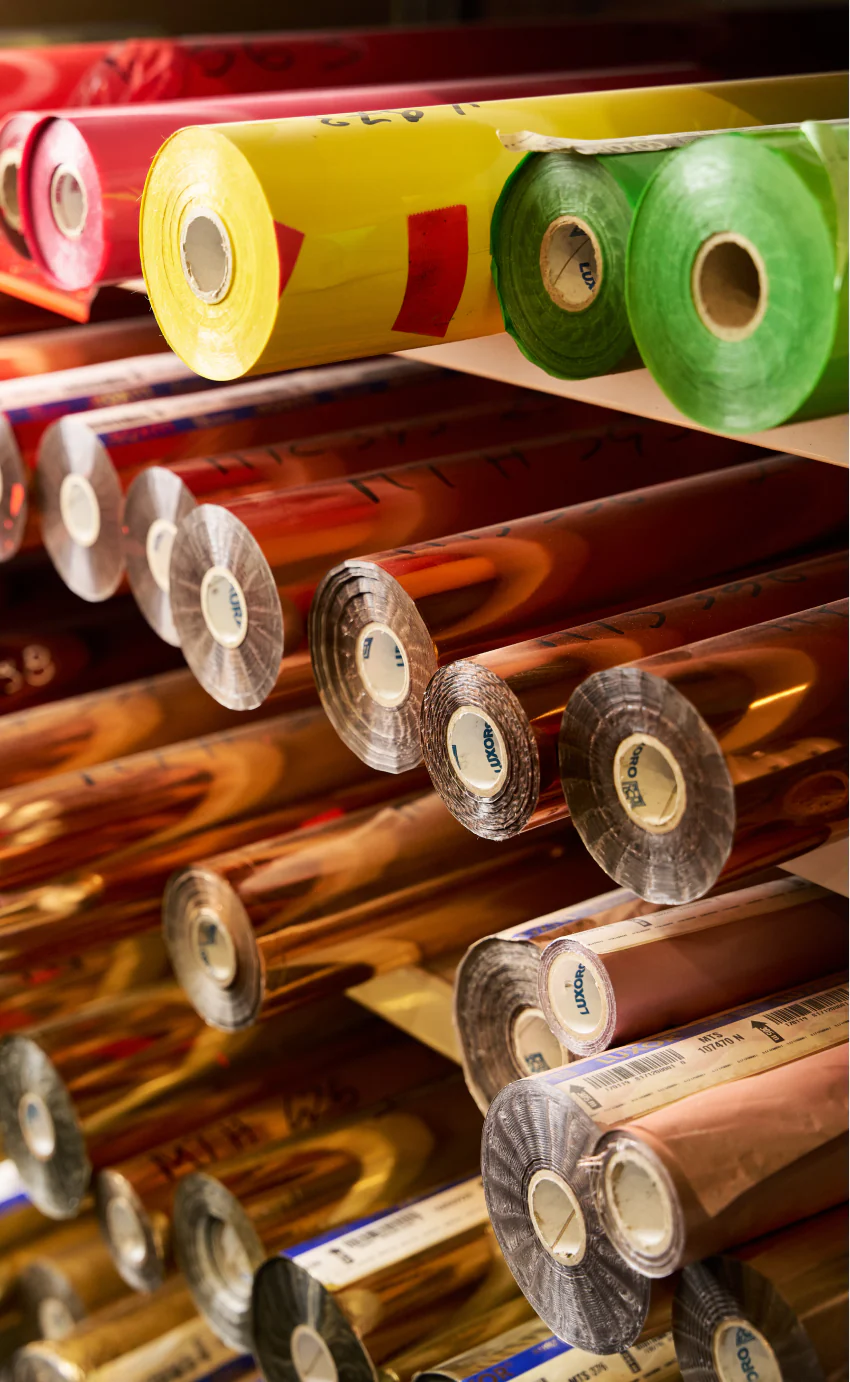
Bobine foil stampa a caldo colori metallizzati - CO&IN

Perché scegliere gli Hang tag CO&IN

Richiedi una consulenza per il tuo progetto e ricevi un preventivo personalizzato.

01

Soluzioni 100% personalizzate

02

Produzione interna

03

Tempi certi di consegna

04

Flessibilità di gestione sia piccole tirature che grandi volumi

05

Responsabilità ambientale certificata FSC®, OEKO-TEX® e GRS

06

Consulenza creativa, tecnica e progettuale

Tecniche di stampa

Possiamo stampare su un'ampia varietà di materiali come:

Carte Naturali
Carte Marcate/Goffrate/Vergate
Carte Realizzate su Misura
Carte Tinte in Pasta
Carte Patinate
Carte Speciali
Carte Riciclate
Carte Uso Alimentare
Carte Pergamenate
Carte Alto Spessore
Carte Cast Coated

E inoltre:

Cotone Resinato Antisfilo
Tyvek
Texon/Jackron
PET Riciclato
Polipropilene